Try an emotional reset when small things feel unusually loud, a worry is taking over, or you are home but still stuck in work mode. If that worry is coloring the whole evening, use this guide to give it less room.
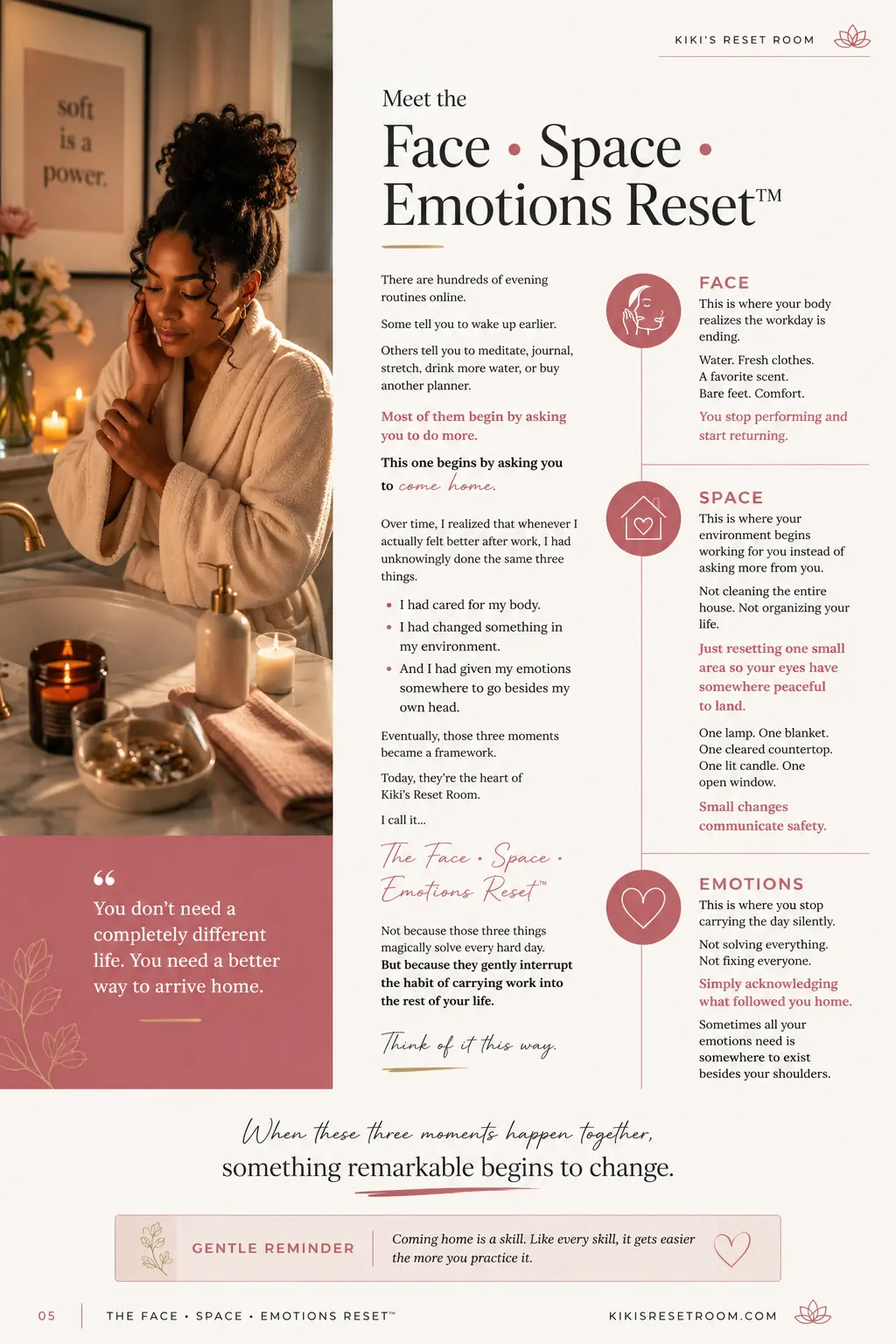
The Face, Space, and Emotions method
Start with your face: wash, mist, moisturize, or hold a warm cloth to your cheeks.
Then reset one small part of your space—a chair, nightstand, sink, or corner.
Finally, name what is true: “I am disappointed.” “I am overstimulated.” “I need quiet.” “I need help.”
A gentler pause
You can tend to what hurts without asking it to disappear.
Put both feet on the floor, lengthen your exhale, and let the next step stay small.
A five-minute emotional reset
Set a timer for five minutes. Put one hand on your chest or stomach. Exhale longer than you inhale. Write three words for what you feel, one sentence for what you need, and one thing you can leave for tomorrow. If you want a dedicated place for that practice, use This Belongs to Tomorrow — Guided Reflection Journal.
You do not need to solve everything in five minutes. Name what can wait and what you need tonight.
What is the emotional reset method?
Kiki’s Face, Space, and Emotions method is simple: give your body a cue, reset one visible area, then name the feeling and what you need.
Does an emotional reset make the feeling disappear?
No. The goal is not to erase a real feeling or force calm. It is to keep one hard moment from deciding the tone of the whole evening. If the mind is stuck on one concern, use the three-question guide for stopping negative thoughts at night.
When should you use it?
Try it after a draining conversation, during overstimulation, when rest guilt appears, or whenever your body has stopped but your thoughts have not.
More emotional reset support
Read what fits tonight.
Start with rest guilt or the thought that keeps circling.