When a prompt feels too structured, try a five-minute brain dump
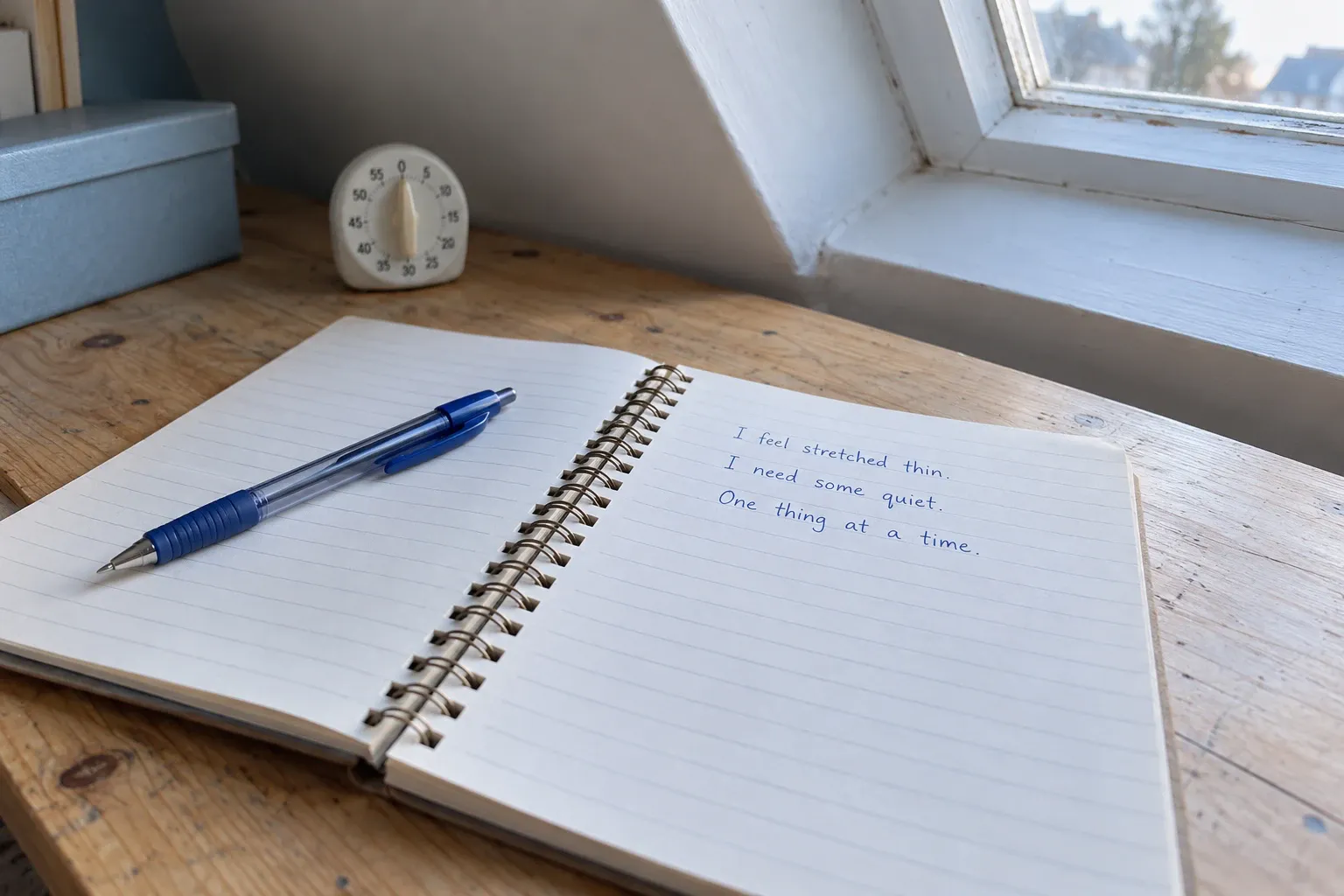
Write every unfinished task, reminder, worry, and loose end in whatever order it arrives. Do not organize or solve the list while you write. When five minutes are up, circle one item that needs a next step tomorrow and mark one thing that can wait.
What followed me home that does not need me tonight?
Which unfinished task needs one first step tomorrow?
What did I handle today that my mind is dismissing?
What boundary would give this evening back to me?
How do you journal for an emotional reset?
Choose one prompt, write honestly for five or ten minutes, then finish: “The next kind thing I can do is…”
What if journaling makes you overthink more?
Stop after one page or when you notice yourself repeating the same conclusion. Put the concern somewhere practical—a reminder, a boundary, a question for tomorrow—or use this guide to stop one tired thought from taking over the evening.
Do you need to journal every day?
No. Use a prompt when you need clarity, not to maintain a perfect streak. Occasional, honest journaling is still useful.
What is the difference between a journal prompt and a brain dump?
A journal prompt gives your attention one question. A brain dump lets thoughts arrive in any order without asking you to organize them first. Use a prompt when you want direction; use a brain dump when the mental noise is too crowded for a neat answer.
How can a brain dump help with overthinking before bed?
It gives unfinished tasks, reminders, worries, and replayed conversations a place outside your head. For a focused version, use the five-minute bedtime brain-dump guide, then close the page when you have chosen what can wait.
More journaling support
Choose a story for the thought you need to set down.
Set down unfinished thoughts, prepare gently, and stop after one honest page.
Start a boundary journal with a simple before-and-after entry, a completed example, and a gentle weekly review to help you follow through on your limits.
Use these journal prompts for a new chapter to notice what you enjoy, separate wants from obligations, and choose one small activity that fits your life.